

In the Winter 2026 issue of The Wildlife Professional, I co-authored an article titled “Re-Humanizing the Workplace: How Leaders and Peers Can Combat Fear.” This blog expands on that piece and explores how re-humanizing the workplace begins with small, intentional acts of courage, transparency, and care.
Space constraints prevented two practical tables from being included in the printed version—yet they are central to this work. I’m sharing them here, along with a reflection on why re-humanizing our workplaces matters more than ever.
If you’d like to read the full article, feel free to contact me and I’ll send you a copy once the issue is released.
Fear’s Invisible Grip and the Cost of Dehumanization
Years ago, I experienced what I now call a “shock-and-awe campaign.” During a board meeting, leadership announced an abrupt reorganization. Half the staff expected it, while the other half—including several longtime employees—had no idea. A few promoted individuals had little to no supervisory experience. Entire teams waited four to six weeks before hearing anything about their roles or the future of their work.
We all operated in a state of fear. Every conversation seemed charged. Every meeting unpredictable. Productivity dropped sharply, and trust vanished overnight.
Looking back, I realize that what we experienced wasn’t just poor communication—it was dehumanization. When transparency and compassion disappear, fear takes their place. People withdraw, creativity diminishes, and meaning fades.
That experience influenced much of my later work on re-humanizing workplaces in conservation. I’ve learned that it’s not the large organizational charts that improve culture—it’s the small, everyday choices to treat people with dignity, curiosity, and care.
Practices to Re-humanize

These small shifts don’t require policy changes or large budgets—they simply require presence and intention. They tell people, You matter here.
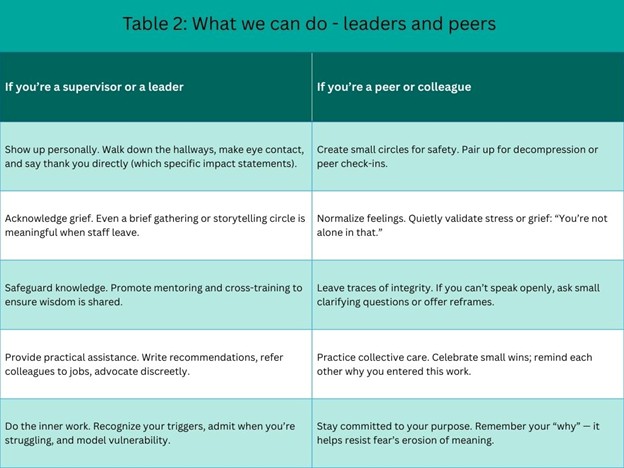
Small Acts, Big Shifts
Re-humanizing a workplace isn’t about grand gestures or strategic plans. It begins in micro-moments—a manager who chooses honesty over spin, a teammate who notices fatigue and offers help, a leader who says thank you before giving feedback.
These are not “soft” skills—they are survival skills for mission-driven work. When people feel safe, they bring their courage, creativity, and full humanity to the challenges ahead. That is the essence of rehumanizing the workplace.
From Fear to Belonging
bell hooks reminds us that love—manifested through empathy, respect, and accountability—is the remedy for fear. Rehumanizing the workplace is essentially love in practice.
When we respect each other’s dignity, the atmosphere shifts. Hope begins to flow again. People speak up more. Teams work together better. The work starts to feel meaningful, not just manageable.
Healing our culture is conservation work. Every small act of care—listening without judgment, offering appreciation, or creating psychological safety—helps us protect not only wildlife and land but also each other.
Join the Conversation
The Winter 2026 issue of The Wildlife Professional includes the full article, “Re-Humanizing the Workplace.” If you’d like a copy or want to explore workshops on re-humanizing leadership and culture in conservation, reach out to me here.
Let’s choose to move against fear—and toward connection.